
Sensai Oase · Chemnitz
Relaxation techniques
Let go. Make time for yourself.
Relaxation · body awareness
A pause that
gives you space.
Guided body scans, autogenic training and progressive muscle relaxation: three different approaches to noticing your body more consciously and practising calm. Discover the methods available at Sensai Oase.
Guided body awareness
Body scans.
Settle in, from head to toe.
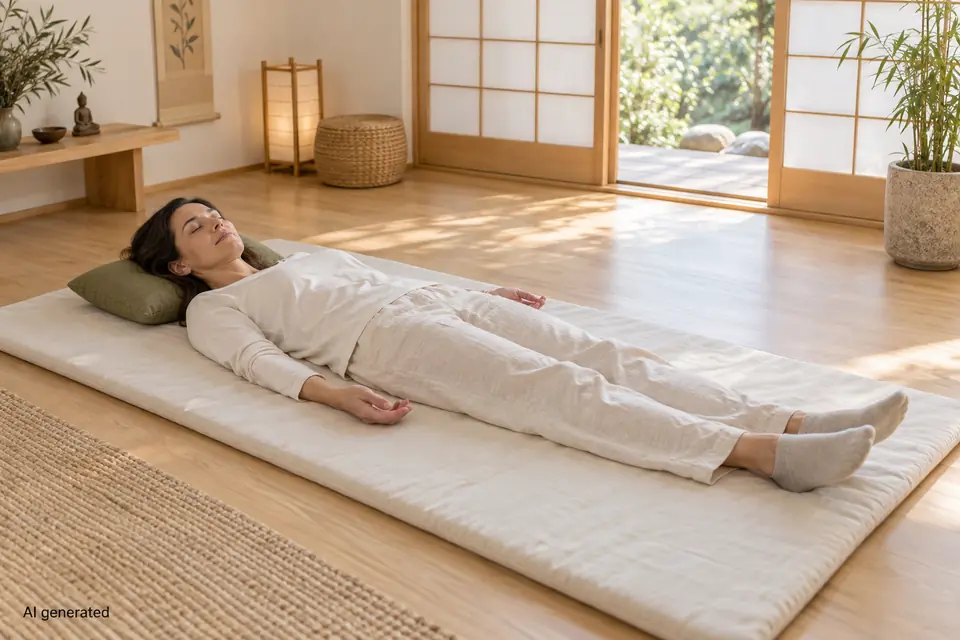
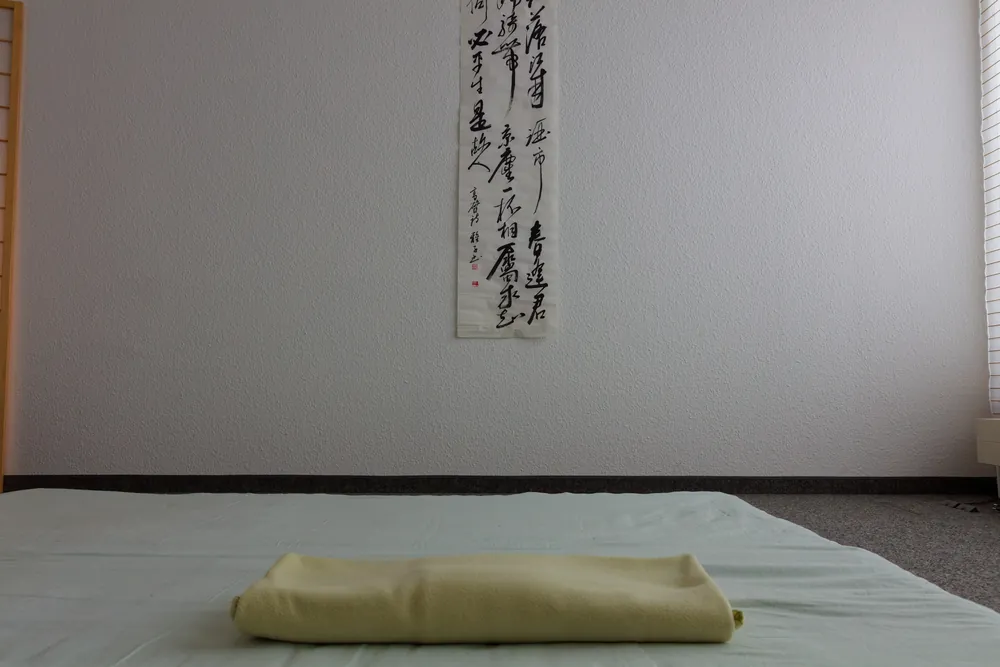
A body scan is a guided relaxation exercise. You lie in a treatment room and listen to a specially chosen text read in a calm voice. Your attention travels through your body, from your head to your feet.
Soft music and a pleasant room fragrance can accompany the exercise. If you prefer silence or are sensitive to scents, please mention this beforehand. The setting should feel comfortable for you.
The focus is on noticing your body’s signals more consciously, for example after physically demanding work, long hours at a desk, tension or exam stress.
Relaxation through mental imagery
Autogenic training.
Learning to be calm.
Autogenic training, or AT, was developed by Johannes Heinrich Schultz. It uses focused self-relaxation and mental imagery and is also described as self-hypnosis.
The exercises offered cover heaviness and calm, warmth and the solar plexus, as well as the heart and forehead. Suitable exercises are selected and guided according to your needs, rather than following a rigid programme.
The focus is on conscious rest, a calmer response to stress and awareness of physical and emotional tension. Improvement in psychosomatic symptoms or concentration cannot be promised for an individual.
Enquire about autogenic training
Tense · notice · release
Jacobson’s progressive muscle relaxation.
Progressive muscle relaxation, or PMR, was developed by Edmund Jacobson. Major muscle groups are deliberately tensed one after another and then released.
Noticing this difference is the heart of the exercise. The course also covers body awareness, recognising your own stress responses and exploring how to change habits that add to your stress.
The method offers an accessible introduction to relaxation techniques. The pace and scope still need to suit you. Muscle tension or other symptoms should be medically assessed where necessary; exercises do not replace this.
Explore the training tooWhich approach suits you?
Through words
In a body scan, you follow a calm guide through your bodily awareness.
Through imagery
In autogenic training, you learn selected exercises in inner calm and awareness.
Through muscles
In PMR, you explore the contrast between tension and release.
Motivation & Stress prevention
Calm beyond
a single appointment.
A relaxation method becomes especially useful when it fits into everyday life. You might practise in the morning or evening. Discuss the approach and rhythm that work for you in person.
If your stress relates to relationships, conflict or sporting demands, you can also explore André’s counselling services. Massage, meditation and Qigong offer other ways to take time for yourself.
Explore motivation and stress managementYour questions
Good to know.
Do I need previous experience?
No. You can ask for a guided introduction. Discuss your experience, capacity and personal limits beforehand.
What if I cannot relax?
Relaxation is not a test. You may change or stop the exercise and discuss your experience. If discomfort persists, a different kind of support may be more suitable.
Is training available for instructors?
Yes. The training page describes courses for teaching autogenic training, progressive muscle relaxation, motivation and stress management. Dates and arrangements are agreed in person.
Your time out starts here.
Together, we will find the right experience for you.
Request an appointment